2026-2027, Building regulations for the Radio Controlled OZ Land Yacht
These rules may vary over time…
Building restrictions:
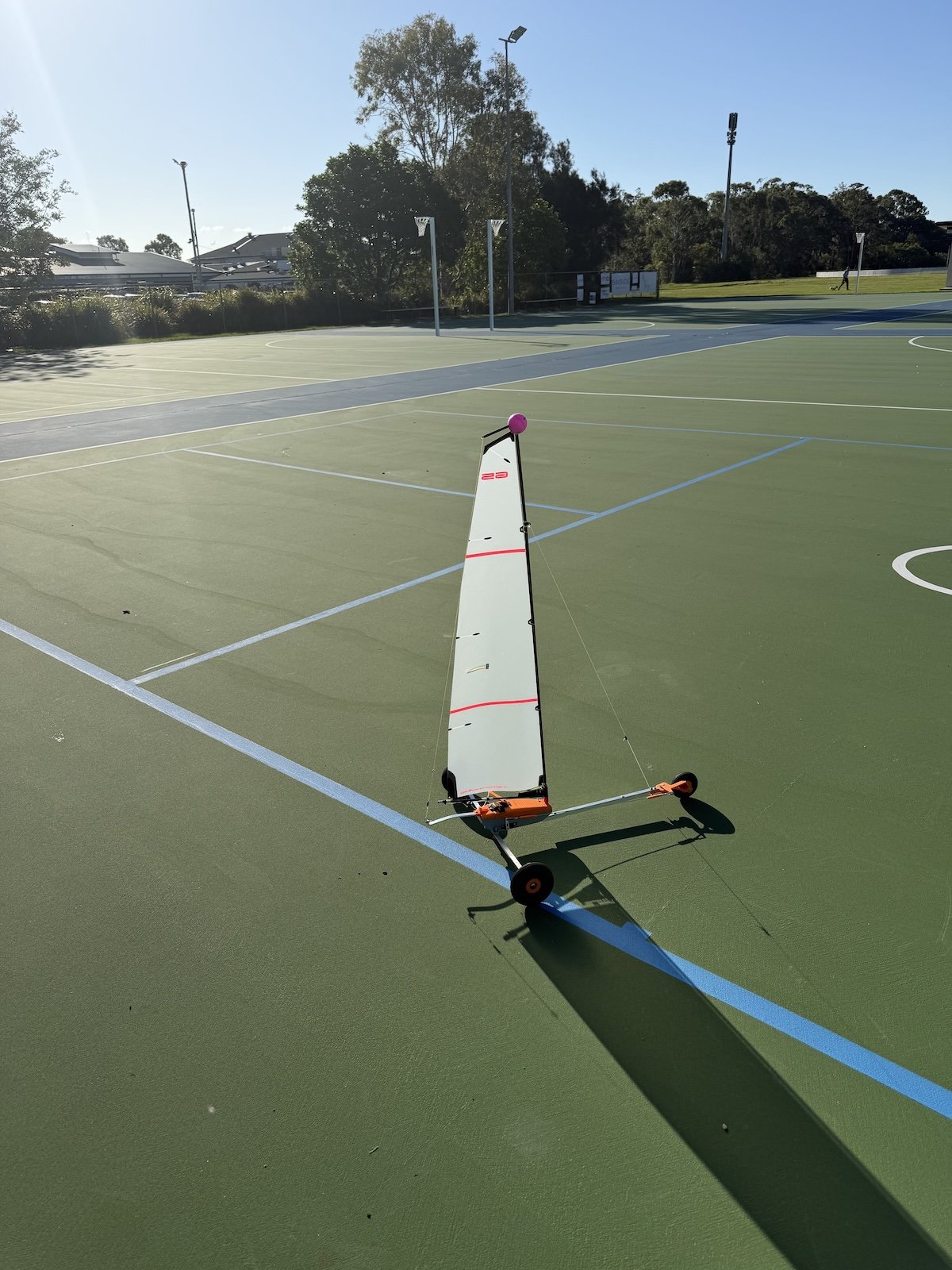
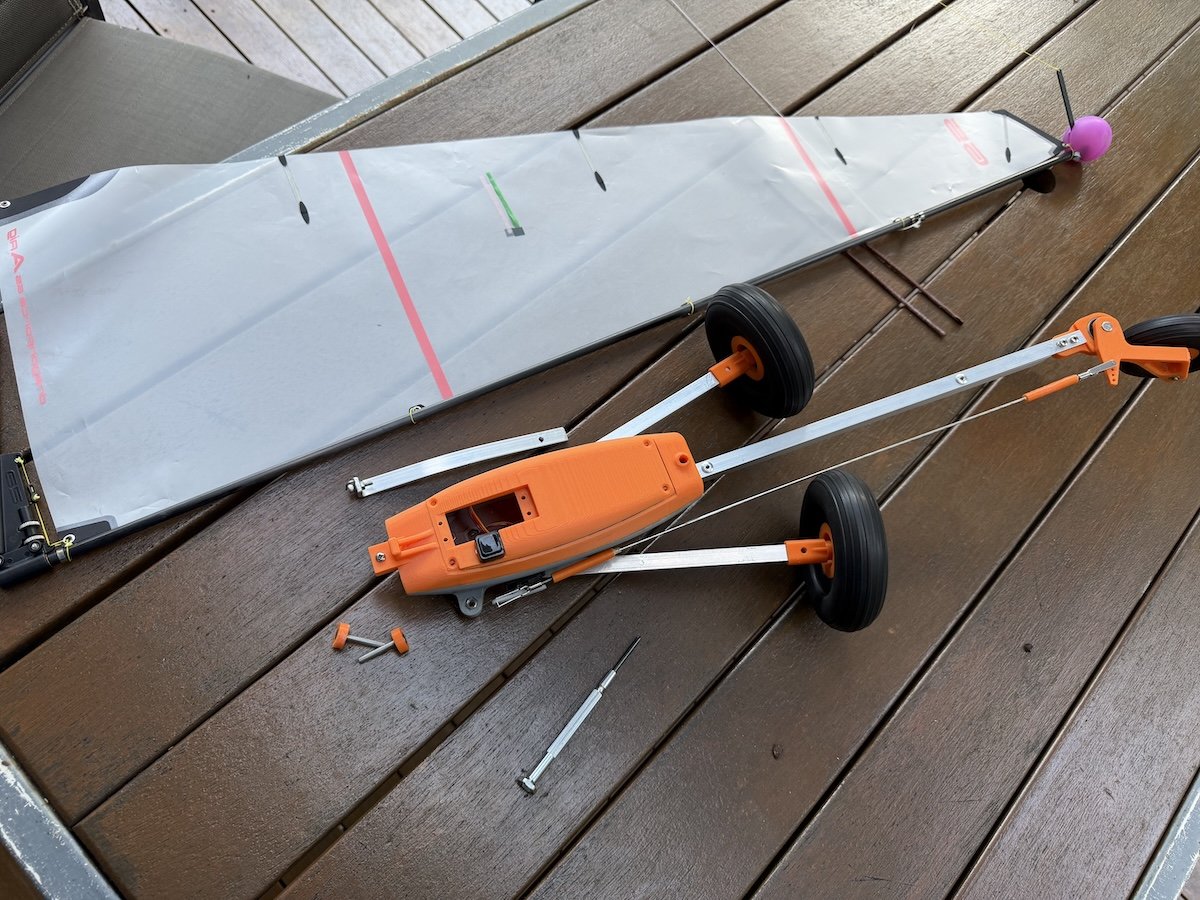
Make one from what ever you want as long as you follow the guidelines on sails and general size and weight restrictions. 3D printing is an easy and versatile option with some fantastic starting designs available online. See our Blog for building ideas.
As the yachts MUST have DF65 sails, our rules are a little different from those in the past.
Wheels: must have 3 wheels
Max Length: 650mm. This is measured from the front of the steering tyre, to the back of the main body. This does not include the optional backstay bar. It can extend as far as you prefer but can only be used as a backstay.
Max Width: 500mm. This measurement is taken from the outside of the tyres across the yacht. If you change to wider tyres, you must use shorter axles. With this in mind, it is a good idea to make it easy to change to different length axles or hubs when designing the yacht.
Add ons: You cannot build outside the triangle of the 3 wheels. If adding front wings or similar, make sure the do not exceed the lines between the triangle. Run a hard edge (ruler or similar) from the front wheel to the back wheel to make sure you are within limits. NB: wings are used to prevent the front wheel bending up on capsize and causing stress on the steering servo which can cause servo to fail.
It is permissible to add mainsheet fair leads on the backstay bar, beyond the main chassis. These can assist to avoid mainsheet pickup/tangles when tacking as the sheet is well back from the rotor arm, if you are using one. This help to avoid mainsheet servo burnout.
Sails/Rigs: This is the most important restriction. You can only use sails that are used on Dragonforce 65 yachts. You can use DF65 C, B, A & A+ rigs MAINSAIL ONLY! No other sails are allowed. You can make your own as long as they conform to DF65 rules. Use a DF65 Mast/Boom with each change of sails OR make your own cheaper variation. The DF65 rigs are hard to beat though. The DF65 boom allows you to add twist into the main.
We normally sail DF65 water based yachts and simply remove the jibs, and then with minor adjustments and removal of the jib, the rigs fit on to the land yachts.
NOTE: you can re-cut any DF sail smaller, but you cannot make a set of sails larger than DF65 sail rules.
Wheels/Tyres: Any type of wheel or tyre can be used. We suggest foam model airplane wheels. Punch the centres out and replace with a hub that can take a bearing. Any type of axle or bearing may also be used. We suggest 8mm roller blade bearing for easy supply and suitability. There are other suggestions in our blog and on downloadbable files and original MUSHU post.
Weight: 750g This is a Maximum weight. There is no minimum. The weight of 750g includes the chassis and all winches, battery and wheels and add on weights.
NOTE: The DF65 rig, mast/boom/sail, is an additional weight and will vary slightly with rig size.
Height: There are no height restrictions. The height is principally governed by the DF65 sail configuration you choose. It is probably better to design the body of your boat with a low centre of gravity.
Voltage: We suggest the addition of a regulator to reduce the voltage to a consistent 5volts. This can help reduce servo failure.